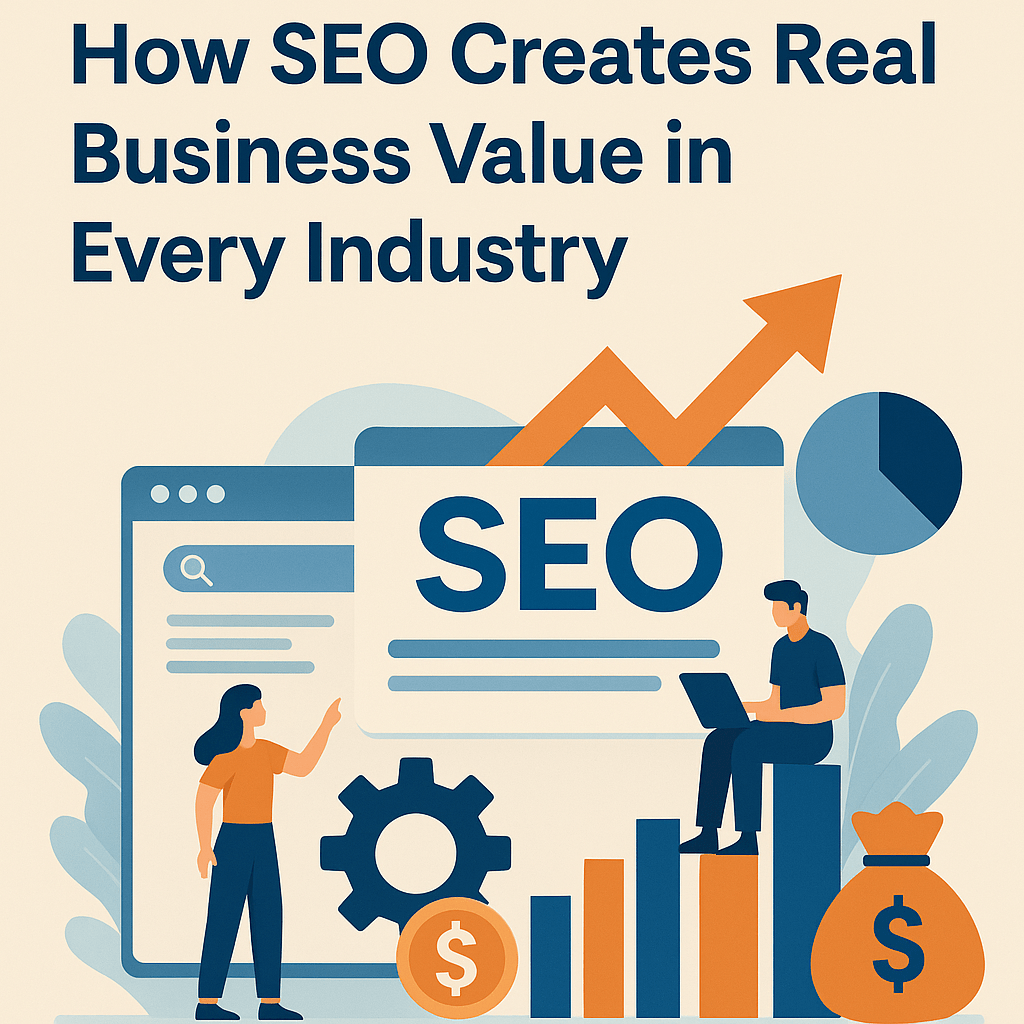
SEO is often pigeonholed as a strategy for eCommerce brands chasing higher product sales. But the truth is, SEO is a powerful driver of growth for every industry. Whether you’re in legal services, healthcare, finance, manufacturing, or real estate, SEO can be your most efficient channel for attracting high-intent leads, reducing acquisition costs, and building long-term authority in your space.
Let’s break down how SEO creates measurable business value across various industries—and why it should be central to your growth strategy.
SEO for Service-Based Industries: Build Trust and Drive Leads
In industries where reputation and expertise matter—like law, healthcare, accounting, or consulting—SEO goes beyond visibility. It positions your firm as a thought leader and helps potential clients pre-qualify your services before even reaching out.
- Content Marketing + SEO: Blogging about frequently asked questions, legal developments, or medical procedures builds topical authority and attracts traffic with clear search intent.
- Local SEO: Optimizing for “near me” searches and Google Business Profiles can drastically increase visibility for professionals with brick-and-mortar offices.
High-Value Conversion Paths: SEO isn’t just about traffic—it’s about turning that traffic into phone calls, contact form submissions, and booked consultations.
SEO for B2B: Accelerate the Sales Cycle and Nurture Complex Buyers
For B2B companies, SEO isn’t just about volume—it’s about targeting the right decision-makers with the right content at every stage of the funnel.
- Informational Content: Product comparisons, case studies, and white papers help attract mid-funnel visitors looking to solve a problem.
- Long-Tail Keywords: Technical or niche keyword targeting helps you reach decision-makers looking for highly specific solutions.
- SEO + CRO: Pairing search optimization with strong landing pages helps shorten the sales cycle and generate marketing-qualified leads (MQLs).
SEO for Real Estate, Finance, and Insurance: Capture Demand When It Matters Most
These industries rely heavily on timing. People search for a mortgage broker, insurance plan, or real estate agent when they need one. That makes SEO a prime channel for demand capture.
- Geo-Targeted Landing Pages: Serve hyper-local markets with dedicated content that ranks for neighborhood or regional terms.
- Featured Snippets and Map Packs: Own the top of the SERPs to increase click-through rates and mobile conversions.
Trust Signals: Optimize pages with testimonials, accreditations, and reviews to boost credibility directly in the SERP.
SEO for Manufacturing and Industrial Companies: Create a Sales-Ready Web Presence
Industrial firms often underestimate SEO because their buyers are niche and products are complex—but their clients are searching.
- Product Pages and Spec Sheets: Rank for technical terms and part numbers used by engineers or procurement professionals.
- Global vs. Regional SEO: Optimize for international buyers with multilingual SEO or regional-specific terms for domestic customers.
Lead Gen via RFQ Forms: Guide traffic toward quote requests, sample downloads, or specification forms.
SEO as a Strategic Asset, Not Just a Marketing Channel
Regardless of industry, SEO builds digital equity over time. Unlike paid ads that stop working when your budget runs out, SEO continues to drive results long after the content is published or the page is optimized.
- Lower CAC (Customer Acquisition Cost) over time.
- Higher CLTV (Customer Lifetime Value) from inbound leads.
Stronger Brand Authority through visibility and trust.
SEO is no longer optional—it’s a foundational piece of modern growth strategy. Whether you’re a doctor, a lawyer, a SaaS founder, or a manufacturer, the right SEO strategy aligns with your business objectives to create lasting value. If you’re not investing in SEO because you’re not an eCommerce brand, you’re missing one of the most efficient and scalable growth channels available today.
Your message has been sent

 nimbleboostseo.com
Leave a comment