
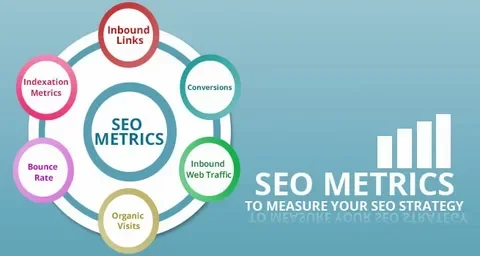
SEO can generate a mountain of data.
From clicks and impressions to bounce rates, keyword rankings, backlinks, and conversions, there is no shortage of numbers to track. The challenge is figuring out which metrics actually tell you whether your SEO strategy is working—and which ones are simply interesting to look at.
If you’re investing time and money into search engine optimization, you need to focus on metrics that connect your SEO efforts to meaningful business results.
This guide breaks down the top SEO metrics that actually matter, what each metric tells you, and how to use the data to make smarter decisions about your website.
Why SEO Metrics Matter
SEO is a long-term strategy. Unlike paid advertising, where you can often see immediate traffic after launching a campaign, organic search growth can take time.
That makes measurement especially important.
Tracking the right SEO metrics helps you understand:
- Whether your website is becoming more visible in search
- Which pages are attracting organic visitors
- Whether your rankings are improving
- What people do after reaching your website
- Which keywords are driving valuable traffic
- Whether SEO is producing leads, sales, or other conversions
- Where your website has opportunities for improvement
However, not every metric deserves equal attention.
For example, getting 10,000 organic visitors sounds impressive, but those visitors don’t necessarily matter if none of them become customers. On the other hand, a smaller website generating highly targeted traffic that produces qualified leads may be getting significantly more value from SEO.
The goal isn’t simply to increase numbers, the goal is to increase meaningful results.
1. Organic Traffic
Organic traffic is one of the most fundamental SEO metrics to monitor. It represents visitors who reach your website through unpaid search engine results. You can monitor organic traffic using tools such as Google Analytics 4 (GA4), which allows you to see how users arrive at your website and what they do once they get there. When analyzing organic traffic, don’t just look at the total number of visitors, look at trends.
Is organic traffic increasing month over month? Are certain pages gaining visibility? Are specific topics consistently attracting visitors?
Why organic traffic matters
Increasing organic traffic generally means your website is becoming more visible to people searching for relevant information, products, or services. But traffic alone isn’t the ultimate goal.
Consider two hypothetical scenarios:
Website A:
10,000 organic visitors per month and 3 leads.
Website B:
2,000 organic visitors per month and 50 leads.
Website B may be generating considerably more business value from its organic traffic. That’s why organic traffic should be analyzed alongside engagement and conversion metrics.
What to look for
Instead of asking only:
“How much traffic did we get?”
Ask:
- Which pages generated the traffic?
- Which search queries brought visitors in?
- Are visitors engaging with the website?
- Are visitors completing important actions?
- Is organic traffic growing over time?
This turns traffic data into something you can actually use.
2. Organic Conversions
If there is one SEO metric that businesses should pay closer attention to, it’s conversions. A conversion occurs when a visitor completes an action that matters to your business.
Depending on your website, that could include:
- Filling out a contact form
- Calling your business
- Requesting a quote
- Scheduling an appointment
- Purchasing a product
- Signing up for a service
- Downloading a resource
- Subscribing to an email list
Traffic tells you that people are arriving.
Conversions tell you whether that traffic is doing something valuable. This is why SEO and analytics should work together. For example, imagine a service business notices that one page receives 500 organic visitors every month and another receives only 150. At first glance, the first page appears to be performing better. But after checking conversions, the business discovers that the 150-visitor page generates twice as many leads. That changes the picture completely.
Track the actions that matter to your business
Your conversion goals should reflect what you actually want visitors to do. For a local service company, phone calls and quote requests may matter most. For an online store, purchases and revenue may be the primary goals. For an informational website, newsletter signups or downloads might be more useful. The important thing is to connect SEO traffic to measurable outcomes
3. Keyword Rankings
Keyword rankings are one of the most recognizable SEO metrics. A ranking tells you where a page appears in search results for a particular query. For example, if your website appears in position 4 for a relevant keyword, that means your page is appearing around the fourth organic result for that search. Rankings can help you understand whether your optimization efforts are moving in the right direction. However, rankings shouldn’t be treated as the final measure of success.
Why rankings aren’t everything
Search results can vary depending on:
- Location
- Search history
- Device
- Search intent
- Personalization
- Search features
- Competition
- Algorithm changes
A keyword ranking by itself doesn’t tell you how much business value that keyword generates. A page ranking #1 for an irrelevant keyword isn’t particularly useful. A page ranking #5 for a highly relevant commercial search could potentially generate far more valuable traffic.
Look for ranking trends
Instead of obsessing over individual daily ranking changes, look for broader patterns. Are your important keywords moving from page three to page two? Are several related keywords improving together? Are your service pages gaining visibility for searches with strong purchase intent? Those trends provide much more useful information than checking one keyword every morning.
4. Search Impressions
Search impressions tell you how often your website appeared in search results. This metric is particularly useful in Google Search Console. An impression doesn’t necessarily mean someone clicked your result. It means your page was shown in a search result that was eligible to be seen.
Why impressions matter
Impressions can reveal increasing search visibility before you see a major increase in traffic. For example, imagine your website’s monthly impressions increase from 10,000 to 25,000 while clicks only increase slightly. That could indicate that Google is beginning to show your website for a wider range of searches. It can be an early sign of growing visibility. Impressions can also help identify opportunities.
If a page receives thousands of impressions but very few clicks, you may want to investigate its:
- Search intent alignment
- Title tag
- Meta description
- Ranking position
- Search result appearance
This brings us to another useful metric.
5. Click-Through Rate (CTR)
Organic click-through rate measures the percentage of people who clicked your search result after seeing it.
The basic calculation is:
CTR = Clicks ÷ Impressions × 100
For example, if your page receives 100 clicks from 2,000 impressions, its CTR would be 5%. CTR can provide clues about how compelling your search result is.
What affects organic CTR?
Several factors can influence whether someone clicks your result, including:
- Your position in the search results
- The wording of your title
- Your meta description
- Search intent
- Brand recognition
- Rich results
- Other search features
- The competitiveness of the query
A low CTR isn’t automatically a problem. If your page ranks in position 10, for example, it will naturally have fewer opportunities to receive clicks than a page ranking near the top. That’s why CTR should always be viewed alongside rankings and impressions.
A useful SEO opportunity
One particularly interesting situation is when a page has:
High impressions + relatively low CTR + strong relevance
That may indicate an opportunity to improve how the page appears in search results. Small improvements to titles and descriptions can sometimes help increase clicks without requiring the page to gain a new ranking position.
6. Backlinks and Referring Domains
Backlinks are links from other websites pointing to your website. They remain an important part of SEO because links can help search engines discover content and understand the authority and relevance of websites. However, the number of backlinks isn’t the only thing that matters. A website with thousands of low-quality or irrelevant links isn’t necessarily in a better position than a website with a smaller number of relevant, trustworthy links.
Look at referring domains
A referring domain is a unique website that links to yours. For example, if five different pages on one website link to your site, that still represents one referring domain. Monitoring referring domains can provide a better understanding of the breadth of your website’s link profile.
Quality matters
A useful backlink strategy focuses on earning links from relevant and credible websites.
Potential sources include:
- Industry publications
- Local organizations
- Professional associations
- Relevant blogs
- News websites
- Business directories
- Community organizations
- Partners and suppliers
SEO isn’t about collecting links simply for the sake of increasing a number. It’s about building legitimate authority and relationships across the web.
7. Indexed Pages
Search engines need to discover and index your pages before they can generally appear in organic search results. That’s why monitoring indexing is an important technical SEO practice. If you publish 100 useful pages but search engines only index a portion of them, your content may not have the opportunity to generate organic visibility.
What can affect indexing?
Common issues include:
- Noindex directives
- Robots.txt restrictions
- Duplicate content
- Canonicalization problems
- Poor internal linking
- Low-quality or thin pages
- Crawl-related issues
- Website architecture problems
Google Search Console can help you identify indexing issues and understand which pages Google has discovered and indexed.
Don’t chase a huge index count
More indexed pages doesn’t automatically mean better SEO. A website doesn’t need thousands of pages to succeed. In many cases, a smaller collection of highly useful, well-optimized pages can perform better than a massive collection of low-value content. The goal is useful pages that deserve to be indexed, not simply more indexed URLs.
8. Engagement Metrics
Getting someone to your website is only the beginning. You also want to understand what happens after they arrive. GA4 provides several engagement-related measurements that can help you understand user behavior.
These may include:
- Engagement rate
- Engaged sessions
- Average engagement time
- Views
- Events
- Key events
What does engagement actually tell you?
Engagement can help answer questions such as:
- Are visitors interacting with the page?
- Are they spending meaningful time consuming the content?
- Are they visiting additional pages?
- Are they completing important actions?
However, engagement metrics require context. A visitor who quickly finds your phone number and calls your business may have a short session—but that doesn’t necessarily mean the page failed. Likewise, someone spending five minutes reading a blog post isn’t automatically a valuable lead. Engagement data becomes much more useful when combined with your actual business goals.
9. Core Web Vitals and Page Experience
SEO isn’t purely about keywords and content. Technical performance matters too. Google’s Core Web Vitals focus on aspects of real-world page experience, including loading performance, responsiveness, and visual stability.
The three primary Core Web Vitals are:
- Largest Contentful Paint (LCP): Measures loading performance.
- Interaction to Next Paint (INP): Measures responsiveness to user interactions.
- Cumulative Layout Shift (CLS): Measures visual stability.
A website that is slow, difficult to interact with, or constantly shifting around while it loads can create a frustrating experience. Technical SEO tools and Google Search Console can help identify performance issues that may need attention.
Don’t obsess over a perfect score
Performance metrics are useful, but SEO shouldn’t become a game of chasing a perfect number. A website’s technical performance should support the overall user experience. The goal is a website that loads efficiently, works properly, and allows visitors to accomplish what they came to do.
10. Local Search Visibility
For businesses serving a specific geographic area, local SEO metrics deserve special attention. A company that operates in Houston, for example, may care far more about visibility among Houston-area customers than about nationwide traffic.
Local SEO measurement can include:
- Local search visibility
- Google Business Profile interactions
- Calls
- Website visits
- Direction requests
- Reviews
- Local keyword rankings
- Leads generated from local searches
These metrics help businesses understand whether their online presence is reaching people in the areas they actually serve. For service-area businesses, this can be especially important. Ranking for a generic national keyword may look impressive in a report, but appearing prominently when nearby customers search for a service can have much more direct business relevance.
11. Revenue and Lead Value From Organic Search
For businesses that can track revenue back to marketing channels, this is one of the most meaningful SEO measurements available.
Instead of asking:
“How much organic traffic did we get?”
You can ask:
“How much business did our organic search traffic generate?”
Depending on the business model, this might involve tracking:
- Leads
- Qualified leads
- Sales
- Revenue
- Customer acquisition
- Assisted conversions
- Lifetime customer value
SEO often influences customers at multiple points in their buying journey. Someone might discover a company through an informational article, return later through a branded search, and eventually become a customer. That’s why attribution isn’t always simple. Still, connecting organic search to actual business outcomes provides a much clearer picture of SEO’s value.
12. Organic Traffic by Landing Page
Overall traffic numbers can hide what’s actually happening across your website. That’s why it’s useful to look at which pages are receiving organic traffic.
For example, you might discover that:
- Service pages are gaining traffic
- Blog posts are attracting informational searches
- Older content is declining
- A newly published page is gaining visibility
- One location page is dramatically outperforming another
This information can influence your content strategy. A page that consistently attracts qualified visitors may deserve additional internal links, updated information, stronger calls to action, or supporting content. A page losing traffic may need to be reviewed for outdated information, changing search intent, declining rankings, or increased competition.
13. Non-Branded vs. Branded Organic Traffic
Another useful distinction is between branded and non-branded searches. Branded searches include your business or brand name. Non-branded searches generally involve people searching for a product, service, problem, or topic without specifically searching for your company.
For example:
Branded:
“Nimble Boost SEO”
Non-branded:
“SEO services in Houston”
Both types of traffic can be valuable, but they tell you different things. Growing branded traffic can indicate increasing awareness of your business. Growing non-branded visibility can show that your website is reaching people who may not have known about your business before searching.
For SEO growth, understanding the difference helps you determine whether you’re primarily capturing existing brand demand or expanding your visibility to new audiences.
14. Content Performance
Not every piece of content will perform equally. That’s normal.
Instead of judging your entire content strategy based on total blog traffic, evaluate individual pieces of content.
Useful questions include:
- Is the article receiving organic impressions?
- Is it generating clicks?
- What keywords is it appearing for?
- Is it attracting the right audience?
- Are visitors engaging with it?
- Does it generate conversions?
- Does it lead visitors to other pages?
- Is the content still accurate and useful?
This can help you determine which content deserves to be updated, expanded, internally linked, consolidated, or potentially removed. Content marketing works best when publishing isn’t the end of the process. Optimization should continue after publication.
Which SEO Metrics Should You Focus On?
There’s no single SEO dashboard that works perfectly for every website. Your most important metrics depend on your goals.
For a local service business
Focus heavily on:
- Organic traffic
- Local search visibility
- Phone calls
- Contact form submissions
- Qualified leads
- Location-based rankings
- Google Business Profile interactions
For an e-commerce website
Pay close attention to:
- Organic traffic
- Product-page traffic
- Organic conversions
- Revenue
- Conversion rate
- Non-branded search visibility
- Product keyword rankings
For a content-focused website
Important metrics may include:
- Organic traffic
- Impressions
- CTR
- Keyword visibility
- Engagement
- Returning visitors
- Content conversions
- Internal navigation
For a new website
Early SEO measurement may focus more heavily on:
- Indexing
- Impressions
- Keyword visibility
- Organic traffic growth
- Technical health
- Backlinks
- Content performance
As the website gains authority and traffic, conversion and revenue metrics become increasingly important.
SEO Metrics That Can Be Misleading
Some metrics aren’t necessarily bad—they’re just easy to misunderstand.
Total traffic
More traffic isn’t automatically better. The quality and relevance of the traffic matter.
Number of keywords ranking
Ranking for thousands of keywords sounds impressive, but many may be irrelevant or generate almost no traffic.
Average ranking position
An average ranking can hide major differences between keywords and pages. It’s more useful when evaluated alongside impressions, clicks, and business relevance.
Bounce rate
A high bounce rate doesn’t automatically mean a page is bad. Someone may find exactly what they need and leave immediately. Always consider the purpose of the page.
Backlink count
More links don’t necessarily mean more authority. The relevance and quality of the links matter.
Pageviews
Lots of pageviews can look impressive, but they don’t necessarily translate into leads or revenue. The best SEO reporting connects activity to outcomes.
How Often Should You Check SEO Metrics?
You don’t necessarily need to check every metric every day. In fact, constantly watching rankings and traffic can make normal fluctuations seem much more significant than they really are. A practical reporting schedule might look like this:
Weekly
Check for major changes such as:
- Significant traffic drops
- Technical problems
- Indexing issues
- Major ranking changes
- Sudden conversion changes
Monthly
Perform a more meaningful performance review:
- Organic traffic trends
- Keyword visibility
- Clicks and impressions
- CTR
- Conversions
- Landing-page performance
- Content performance
- Local visibility
Quarterly
Take a broader strategic view:
- Which SEO initiatives worked?
- Which pages generated the most business value?
- What content should be updated?
- Where are new opportunities?
- Are technical issues limiting growth?
- How is organic search contributing to overall marketing goals?
The longer the time period you analyze, the easier it becomes to distinguish real trends from normal day-to-day fluctuations.
Build an SEO Dashboard Around Business Goals
The best SEO dashboard isn’t necessarily the one with the most data. It’s the one that helps you make decisions. A useful dashboard might start with just a handful of measurements:
Visibility
- Impressions
- Keyword rankings
- Organic clicks
Traffic
- Organic sessions
- Top landing pages
Engagement
- Engagement rate
- Key events
Conversions
- Leads
- Purchases
- Calls
- Other meaningful conversions
Authority
- Referring domains
- Relevant backlinks
Technical health
- Indexing
- Core Web Vitals
- Major technical issues
From there, you can add metrics that are specifically relevant to your industry and business model.
The SEO Metrics That Matter Most Are the Ones That Help You Improve
SEO generates an enormous amount of information. The trick isn’t collecting every possible number, It’s identifying the measurements that answer important questions.
Are more people finding your website? Are you appearing for searches that matter? Are users clicking your results? Are they engaging with your website? Are they becoming customers? Are your most valuable pages improving?
Those questions lead to better SEO decisions than simply trying to make every metric go up.
Successful SEO isn’t about having impressive numbers in a report. It’s about using data to create measurable improvements in visibility, traffic, leads, and business growth.
If you want to understand how your website is performing in search, the first step is identifying the right metrics for your specific goals. From there, tools like Google Search Console and GA4 can turn raw search data into actionable insights—and help you determine where your SEO strategy should go next.
Frequently Asked Questions
What is the most important SEO metric?
There isn’t one universal metric that is most important for every website. For many businesses, organic conversions, qualified leads, and revenue generated through organic search are more meaningful than traffic or rankings alone.
Are keyword rankings still important for SEO?
Yes. Keyword rankings provide useful information about search visibility, but they should be analyzed alongside impressions, clicks, traffic, and conversions. A ranking only matters if it helps your website reach relevant searchers.
Is organic traffic a good SEO KPI?
Organic traffic is an important SEO KPI because it shows how many visitors are reaching your website through unpaid search. However, traffic should be evaluated alongside engagement and conversion data to determine whether it is actually valuable.
How do I measure SEO success?
Start by identifying your business goals and then connect them to measurable SEO outcomes. Depending on your website, this could include organic traffic, leads, sales, revenue, keyword visibility, local search performance, and conversions.
How long does it take to see SEO results?
SEO results vary depending on factors such as website history, competition, technical health, content quality, search demand, and the SEO work being performed. Some improvements can appear relatively quickly, while meaningful organic growth often takes months of consistent work.
What tools can I use to track SEO metrics?
Google Search Console and Google Analytics 4 are two of the most useful starting points. Other SEO platforms can provide additional information about rankings, backlinks, competitors, technical issues, and keyword opportunities.
Final Thoughts
SEO measurement doesn’t have to be complicated. Start with the metrics that connect search visibility to your actual goals. Track them consistently, look for meaningful trends, and use what you learn to improve your website.
When you stop chasing vanity metrics and start measuring what actually contributes to growth, SEO becomes much easier to understand—and much more valuable as a long-term marketing strategy.

