
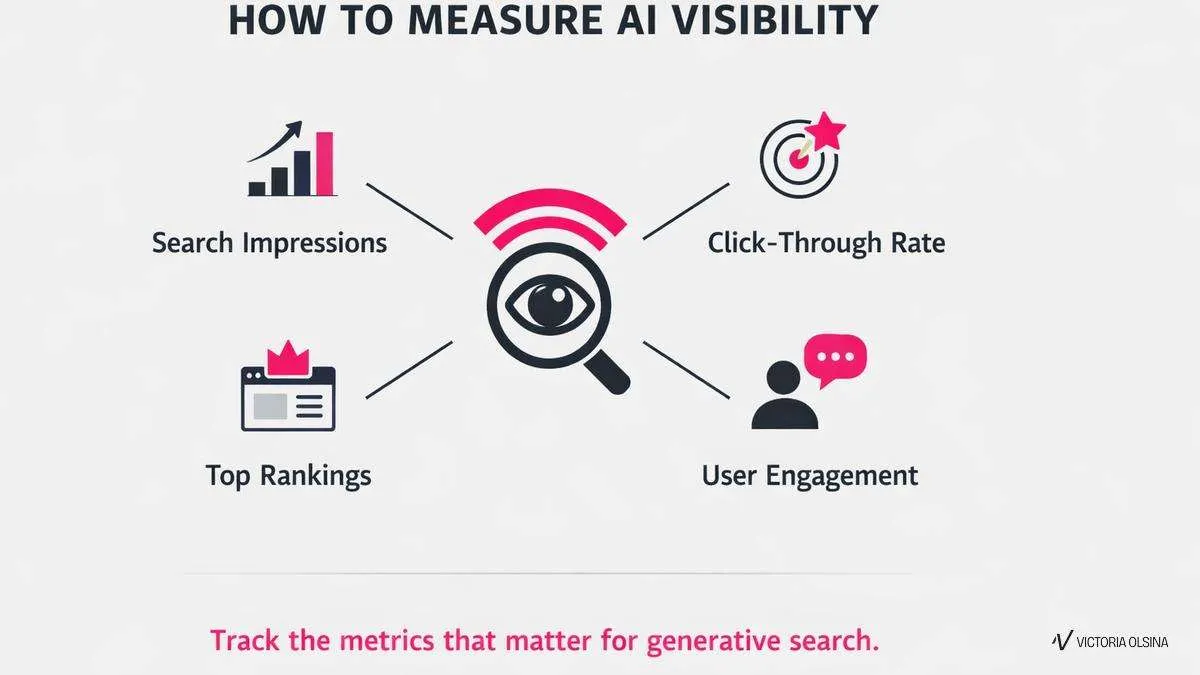
Search engine optimization has traditionally focused on familiar metrics like keyword rankings, organic traffic, and click-through rates. While these measurements remain important, the rise of AI-powered search is changing how businesses evaluate their online visibility. Platforms such as ChatGPT, Google AI Overviews, Google AI Mode, Perplexity, and Microsoft Copilot are becoming additional ways for consumers to discover businesses, products, and services. Instead of browsing through a list of search results, users can receive AI-generated answers that summarize information and recommend relevant sources.
For businesses, this introduces an important question: How can you measure your visibility when customers may discover your brand without ever visiting your website? Understanding AI search visibility requires looking beyond traditional traffic reports. AI citations, brand mentions, referral traffic, and lead generation all provide valuable insights into how effectively a business appears in AI-powered search experiences. By tracking these metrics together, businesses can develop a clearer picture of their online presence and identify opportunities to improve their digital marketing strategies.
What Is AI Search Visibility?
AI search visibility refers to how frequently and prominently a brand, website, or piece of content appears in AI-generated search results and responses. In traditional search, visibility is commonly measured through rankings and impressions. A website appearing among the top organic results for a relevant keyword has an opportunity to attract visitors. AI-powered search works differently because an AI assistant might recommend a business by name, cite a blog post as supporting evidence, or summarize information from multiple websites without directing users to any particular source.
For example, someone might ask an AI platform what they should look for when hiring an SEO agency in Houston. The response could mention several agencies, reference informative articles, or provide recommendations based on information gathered from different sources. A business appearing in that response may gain valuable exposure even if the user never clicks through to its website. This is why AI search visibility should be evaluated using multiple measurements rather than relying on website traffic alone.
Tracking AI Citations
One of the most direct ways to measure AI search visibility is through citations. An AI citation occurs when an AI-powered search platform references a website or webpage as a source supporting its generated response. For example, an AI assistant answering a question about local SEO might cite a blog explaining how Google Business Profile optimization works. Even if the business isn’t specifically recommended, the citation provides an opportunity for its content to reach potential customers.
Citations can indicate that a website’s content is relevant to the questions AI systems are answering. By monitoring citations, businesses can identify which pages appear in AI-generated responses, discover topics where their content is being referenced, and recognize opportunities to improve underperforming pages. However, citations shouldn’t be confused with traditional backlinks. Being cited in an AI response does not automatically mean a website gains ranking authority or receives additional visitors.
Businesses can begin tracking citations through tools such as Google Search Console and Bing Webmaster Tools. Google’s generative AI performance reporting provides additional insight into website visibility within supported AI-powered Google Search experiences, including AI Overviews and AI Mode. Meanwhile, Bing Webmaster Tools offers AI Performance reporting that allows website owners to examine citations, cited pages, and related grounding queries across supported Microsoft AI experiences. These tools provide a useful starting point for understanding how often content is referenced, although neither offers a complete picture of visibility across every AI platform.
Measuring Brand Mentions in AI Responses
While citations indicate that a website has been referenced, brand mentions measure something different. An AI brand mention occurs when an AI-generated answer includes the name of a business, product, or organization. For example, if someone asks an AI assistant to recommend digital marketing agencies in Texas and a particular agency appears in the response, that counts as a brand mention, even when the AI doesn’t provide a direct link to its website. This distinction matters because a business can be mentioned without being cited, or cited without being mentioned.
A practical way to monitor brand mentions is to create a list of questions potential customers might ask AI search platforms. These might involve finding local services, comparing providers, understanding industry topics, or identifying reputable businesses in a particular area. By testing the same questions across platforms such as ChatGPT, Perplexity, and Google AI Mode, businesses can document how often their names appear, which competitors receive recommendations, and whether their websites are cited as supporting sources.
One useful measurement is the AI mention rate, calculated by dividing the number of responses mentioning a brand by the total number of relevant responses tested and multiplying by 100. For example, if a business tests 40 relevant questions and appears in 10 responses, its observed mention rate is 25%. Although this doesn’t represent the percentage of all real-world AI searches mentioning that business, it provides a useful benchmark for comparing results over time. Since AI-generated responses can vary based on the platform, location, conversation context, and timing, consistent testing is more valuable than relying on an individual result.
Understanding AI Referral Traffic
Although AI-generated answers can provide information without requiring a website visit, users may still click through to learn more about a business. These visits are known as AI referral traffic, and tracking them helps businesses determine whether their AI search visibility is encouraging users to explore their websites.
Google Analytics 4 (GA4) provides a practical way to monitor identifiable AI referral traffic. Within the Traffic Acquisition report, businesses can examine session sources to identify visits associated with platforms such as ChatGPT and Perplexity. Website owners can then compare these visits with engagement metrics and conversion events to better understand how users arriving from AI platforms interact with their content. ChatGPT also includes a utm_source=chatgpt.com parameter in referral URLs from ChatGPT search, which can help identify some incoming traffic.
However, AI-related traffic isn’t always easy to separate from other sources. Some visits may lack identifiable referral information, while clicks from Google’s AI-powered search experiences may appear within broader Google Search reporting rather than as a separate AI traffic source in GA4. Because of these limitations, businesses should avoid treating referral traffic as a complete representation of their AI search visibility. Instead, it should be considered alongside citations, brand mentions, and other performance measurements.
Connecting AI Search Visibility to Leads and Conversions
Appearing in AI-generated responses can increase brand exposure, but businesses ultimately need to understand whether that visibility contributes to meaningful results. A company might receive numerous AI citations without generating noticeable customer inquiries, while another might receive fewer mentions but attract visitors who are ready to request a service. This is why lead generation and conversion tracking are essential parts of measuring AI search performance.
The most useful conversion metrics depend on the type of business, but common examples include contact form submissions, phone calls, appointment bookings, consultation requests, and completed purchases. Businesses can configure these actions as key events in GA4 and examine whether visitors arriving from identifiable AI sources are completing them. For example, if users referred by ChatGPT frequently submit consultation requests, that may indicate the platform is helping attract qualified prospects rather than simply generating additional website visits.
It’s also important to recognize that not every customer journey follows a direct path from an AI response to a website. Someone might discover a company through an AI recommendation, search for its name on Google several days later, and then contact the business. In this situation, the original AI interaction may have influenced the decision, but analytics could attribute the visit to another traffic source. Including a question such as “How did you first hear about us?” on contact forms can provide additional insight into these indirect interactions. While self-reported information isn’t always precise, it can help businesses understand customer discovery patterns that traditional analytics might overlook.
Using AI Visibility Data to Improve Your SEO Strategy
Measuring AI search visibility becomes most valuable when businesses use the information to improve their existing SEO strategies. If certain pages consistently receive citations, examining their content can reveal why they may be relevant to AI-generated answers. These pages might provide clear explanations, answer specific customer questions, or contain useful information that other websites don’t offer. Identifying these strengths can help businesses develop similar content around related topics while improving existing pages with updated examples, clearer explanations, and additional supporting information.
AI visibility testing can also reveal gaps in a business’s online presence. For example, a company might discover that AI assistants regularly recommend competing agencies when users ask about local SEO audits, but rarely mention its own services. This could highlight an opportunity to create more informative service pages, publish relevant educational content, or improve the clarity of existing website information. Rather than attempting to manipulate AI-generated answers, businesses should focus on providing accurate, useful content that addresses their customers’ needs.
Strong technical SEO remains an essential part of this process. AI search optimization doesn’t replace traditional SEO practices such as maintaining a logical website structure, developing helpful content, using descriptive headings, and ensuring that search engines can access important pages. Clear internal linking, accurate business details, and regularly updated information can support overall search visibility while making a website easier for both users and search systems to understand.
Businesses should also evaluate AI visibility over time instead of making major decisions based on individual responses. AI-generated results are dynamic, and changes in models, prompts, and search conditions can influence which sources appear. Reviewing citation trends, mentions, traffic, and conversions consistently can help identify patterns that are more meaningful than isolated fluctuations.
Creating a Simple AI Search Visibility Report
Businesses don’t necessarily need expensive monitoring software to begin measuring AI search visibility. A spreadsheet combined with Google Search Console, Bing Webmaster Tools, and GA4 can provide a useful starting point. A monthly report might include the number of AI citations recorded, which pages received the most exposure, how frequently the business appeared in a consistent set of AI-generated responses, and whether identifiable AI referral traffic contributed to leads or conversions.
For example, a business could begin by selecting 20 to 40 questions related to its services and testing them across relevant AI platforms each month. Alongside those observations, the business could record citation data from available webmaster tools and review changes in AI referral traffic through GA4. Over several months, these measurements could reveal whether particular topics are gaining visibility, which content is attracting attention, and where additional optimization efforts might be worthwhile.
It’s important to recognize that different tools measure different platforms and types of activity. A citation reported by Bing isn’t necessarily equivalent to a mention observed in ChatGPT, and neither measurement guarantees that a customer visited a website. Keeping these metrics separate while evaluating overall trends allows businesses to make more informed decisions without overstating their results.
Why AI Search Visibility Matters for the Future of SEO
AI-powered search is expanding the ways customers discover information online, creating additional opportunities for businesses to build awareness and reach potential customers. Success is no longer limited to securing a high position in traditional search results. Visibility can also come from being referenced as an information source, appearing in relevant AI-generated recommendations, and providing content that helps answer customer questions.
However, appearing in an AI response is only one part of a successful digital marketing strategy. Businesses also need to understand whether that exposure leads to meaningful engagement, customer inquiries, and long-term growth. The most effective approach combines traditional SEO measurements with AI citations, brand mentions, referral traffic, and conversion data. By monitoring these signals together, businesses can develop a clearer understanding of how their digital presence performs as search technology continues to evolve.
Final Thoughts
AI search visibility presents new opportunities for businesses, but understanding its value requires more than counting mentions or citations. A successful measurement strategy considers where a business appears, how customers discover its content, whether that exposure generates website visits, and how those visits contribute to business growth.
Traditional SEO remains an essential foundation for online success. As AI-powered search becomes another part of the customer journey, businesses that combine reliable SEO practices with thoughtful AI visibility tracking will be better equipped to evaluate their performance and adapt their strategies.
At Nimble Boost SEO, we understand that improving search visibility means more than chasing rankings. It’s about helping businesses build a stronger online presence, reach relevant audiences, and turn visibility into meaningful opportunities. By combining established SEO strategies with an understanding of AI-powered search, businesses can prepare for the changing digital landscape while continuing to focus on what matters most: reaching customers and supporting sustainable growth.

