
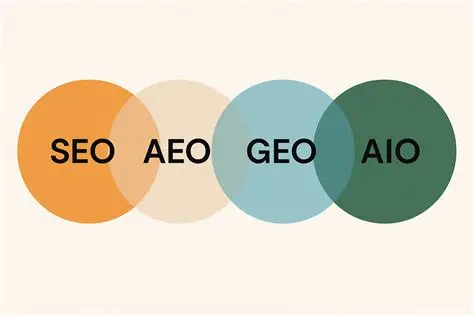
What Is AIO, GEO, and AEO? The Future of SEO in the Age of AI Search
Search engine optimization has changed dramatically over the last decade. Businesses once focused almost exclusively on ranking webpages in Google’s traditional search results. Today, the rise of artificial intelligence has transformed how people discover information online.
Instead of clicking through multiple websites, users can now receive direct answers from AI-powered search engines, chatbots, and voice assistants. This shift has introduced several new optimization strategies that businesses need to understand: AIO (AI Optimization), GEO (Generative Engine Optimization), and AEO (Answer Engine Optimization).
If your business relies on online visibility, understanding these emerging concepts is critical. While traditional SEO remains important, companies that adapt to AI-driven search experiences will have a significant competitive advantage in the coming years.
The Evolution of Search
Traditional search engines worked by displaying a list of webpages that matched a user’s query. The goal of SEO was straightforward: rank as high as possible on the search engine results page (SERP).
Today, platforms such as ChatGPT, Google AI Overviews, Gemini, Perplexity, Claude, and voice assistants are changing user behavior. Rather than browsing ten different websites, users often receive a summarized answer generated from multiple sources.
This means businesses must optimize not only for rankings but also for inclusion within AI-generated responses.
That’s where AIO, GEO, and AEO come into play.
What Is AIO (AI Optimization)?
AI Optimization (AIO) refers to the process of making your content, website, and brand more visible and understandable to artificial intelligence systems.
Rather than focusing solely on search engine crawlers, AIO focuses on helping AI models identify, interpret, and trust your content when generating responses for users.
Key Goals of AIO
A successful AI Optimization strategy aims to:
- Increase brand visibility in AI-generated answers
- Improve content comprehension by language models
- Strengthen authority and trust signals
- Create structured, easy-to-reference information
- Ensure AI systems accurately represent your business
How AI Systems Evaluate Content
AI models look for several signals when determining what information to include in generated responses:
Content Authority
Expert, well-researched content is more likely to be referenced by AI systems.
Topical Relevance
Content should clearly address specific topics and user questions.
Structured Information
AI systems perform better when information is organized logically with headings, lists, FAQs, and concise explanations.
Brand Mentions
Businesses that are frequently mentioned across reputable websites often gain more visibility in AI-generated responses.
Consistency
Consistent information across your website, business listings, social profiles, and citations builds trust.
Why AIO Matters
As AI becomes integrated into search experiences, businesses that optimize for AI visibility can gain exposure even when users never visit a traditional search results page.
This represents a significant shift in digital marketing strategy and makes AIO one of the most important emerging disciplines in search marketing.
What Is GEO (Generative Engine Optimization)?
Generative Engine Optimization (GEO) focuses specifically on improving visibility within AI-generated answers produced by generative search engines.
Unlike traditional SEO, where the goal is a website click, GEO aims to increase the likelihood that your brand, expertise, or content will be referenced in AI-generated responses.
Examples of Generative Search Platforms
Examples include:
- ChatGPT Search
- Google AI Overviews
- Gemini
- Perplexity
- Claude
- Microsoft Copilot
These platforms generate responses by analyzing information from multiple sources rather than simply displaying links.
GEO vs Traditional SEO
Traditional SEO asks:
“How can I rank #1 on Google?”
GEO asks:
“How can my information become part of the AI-generated answer?”
This difference fundamentally changes content strategy.
GEO Best Practices
Create Comprehensive Content
AI systems often favor content that thoroughly covers a topic.
Instead of creating several thin pages, consider publishing comprehensive guides that answer multiple related questions.
Demonstrate Expertise
Include:
- Expert insights
- Original research
- Case studies
- Statistics
- Real-world examples
These signals help establish authority.
Use Clear Language
Generative engines prefer content that is easy to understand and summarize.
Avoid unnecessary jargon whenever possible.
Build Brand Authority
Strong brands are more likely to appear in AI-generated responses.
Authority can be strengthened through:
- Quality backlinks
- Public relations efforts
- Industry recognition
- Reviews and testimonials
- Thought leadership content
Maintain Content Freshness
AI systems often prioritize recent and updated information.
Regularly reviewing and updating content can improve visibility.
GEO and Local Businesses
Local businesses can benefit tremendously from GEO.
For example, when a user asks:
“Who is the best SEO company in Houston?”
An AI system may generate a response referencing businesses it considers authoritative.
Companies investing in GEO increase their chances of being included in those recommendations.
What Is AEO (Answer Engine Optimization)?
Answer Engine Optimization (AEO) focuses on helping search engines, voice assistants, and AI systems provide direct answers to user questions.
AEO is particularly important because modern search behavior is becoming increasingly conversational.
Users ask questions such as:
- What is local SEO?
- How much does SEO cost?
- How long does SEO take to work?
- What is the difference between SEO and PPC?
Search engines often attempt to answer these questions directly without requiring a click.
Why AEO Is Important
The growth of:
- Voice search
- Smart speakers
- AI assistants
- Featured snippets
- AI Overviews
has dramatically increased the importance of answer-focused content.
How to Optimize for AEO
Answer Questions Directly
Provide clear answers near the beginning of your content.
For example:
“What is local SEO?”
Local SEO is the process of optimizing a business’s online presence to improve visibility in location-based search results.
A concise answer helps answer engines understand your content.
Use FAQ Sections
Frequently Asked Questions are highly effective for AEO.
They provide structured answers that AI systems can easily interpret.
Implement Schema Markup
Structured data helps search engines understand page content.
Useful schema types include:
- FAQ Schema
- Local Business Schema
- Organization Schema
- Article Schema
Write Conversationally
Many users interact with search through natural language.
Content should mirror how people actually ask questions.
Optimize for Featured Snippets
Featured snippets often serve as source material for answer engines.
Use:
- Lists
- Tables
- Definitions
- Step-by-step instructions
to improve snippet eligibility.
How AIO, GEO, and AEO Work Together
Many marketers mistakenly view these as separate strategies.
In reality, they work together.
SEO Builds Visibility
Traditional SEO helps users discover your content through search rankings.
AEO Builds Answerability
AEO helps search engines extract clear answers from your content.
GEO Builds AI Presence
GEO increases the likelihood that AI systems will reference your brand and expertise.
AIO Connects Everything
AIO serves as the broader strategy that ensures your business remains visible across AI-driven experiences.
Businesses that combine all four approaches—SEO, AEO, GEO, and AIO—position themselves for long-term success.
The Future of Search Is Hybrid
Traditional search isn’t disappearing anytime soon. Millions of users still rely on search results pages every day.
However, AI-generated answers are becoming increasingly common.
The future of search will likely combine:
- Traditional search results
- AI-generated summaries
- Voice search responses
- Conversational AI interactions
- Personalized recommendations
Businesses that adapt now will be better positioned to capture traffic, leads, and customers as search continues to evolve.
How Nimble Boost SEO Helps Businesses Adapt
At Nimble Boost SEO, we understand that modern search optimization extends beyond traditional rankings.
Our strategies focus on helping businesses improve visibility across:
- Google Search
- AI Overviews
- ChatGPT Search
- Voice Search
- Local Search
- Generative AI Platforms
By combining proven SEO practices with emerging AIO, GEO, and AEO strategies, we help businesses build sustainable online visibility in an increasingly AI-driven world.
Final Thoughts
AIO, GEO, and AEO represent the next evolution of search optimization.
As artificial intelligence continues to reshape how people find information online, businesses must adapt their digital marketing strategies accordingly.
Traditional SEO remains essential, but future success will increasingly depend on whether AI systems can understand, trust, and reference your content.
Organizations that invest in AI Optimization, Generative Engine Optimization, and Answer Engine Optimization today will be better prepared for the future of search tomorrow.

